A Controversial Children's Book: Gloria Whelan’s Homeless Bird, Reviewed
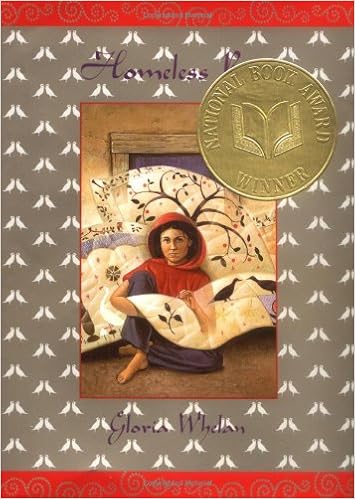
Image: Amazon
by Paula Blanco
Did you know that in India widows are
discriminated against and are a disgrace?
Shouldn't we do something about it? Well we
probably should if this were actually true, but this is false, despite what the
book Homeless Bird makes you think.
However, I didn’t know anything about this
small book before opening it, so I didn’t have many expectations. I knew it is
a children’s book and most of the time this type of book doesn't deal with such
serious issues. But I was intrigued by the peculiar name of this book, as it
doesn’t sound like a children’s book at all. I didn’t expect what the story
would really be about.
As I started reading the first chapter, I
was introduced to Koly, a 13-year-old girl from India, who was not shocked
after finding out she was about to get married. She knew her parents didn't
have money and they couldn’t handle having another mouth to feed. After this,
she was introduced to her future husband who was the same age as her, but there
was certainly a difference; he was sick. Her maa (Mother in India) explains to
the boy’s mother she was a good worker and gave her money to receive her. After
they got married, she was forced to work all day, and she was being poorly
treated by her mother in law.
Could the story of Koly be even more
tragic?
Well, as I kept reading, the tragedies
didn’t stop there: Koly’s husband died, so his
mother, Sas, was devastated and took
revenge on Koly by making her work double.
And no, they don't stop here either! In the
India portrayed in this book, widows are considered bad luck, so they are
abandoned in a city. Yes, this happened to Koly. Yes, very melancholic. As Koly
didn't have any money, she was left homeless. But at least she had something to
eat, provided by the monks to other widows. Later on, she learned to be
independent with the help of her new friends and new husband.
Isn't this a little bit too heavy for a
children's book?
Maybe, but I'm not concerned about this
being too heavy for children. What I am
concerned about is this book misinforming
children about Indian culture. Before I
started researching, I believed that the
story was true and factual. Nevertheless, as
mentioned by the author, she got the idea
by reading a story about child widows and
seeing this in the Asian embroidery in
America. These Indian “traditions”, then, are
not real, as they’re rarely seen in India,
which then gives a bad impression of India
and their supposed culture to young,
uninformed readers.
So, is this book worth reading?
It depends. Reading this book at a young
age could not only be confusing, but could
make young readers despise Indian culture.
However, if we are already informed about
India, we could distinguish between reality
and fiction, and enjoy this short book
about extraordinary and tragic situations
that happen to an Indus girl; Koly. The
author clearly expresses emotions and
situations that make you reflect on life, in an
engaging way, such that once you start
reading you will not stop. If you consider
yourself someone interested in somewhat
true stories, then this is the right book for
you.


Comments
Post a Comment